Dr. Zhu's Seasonal Health Letter
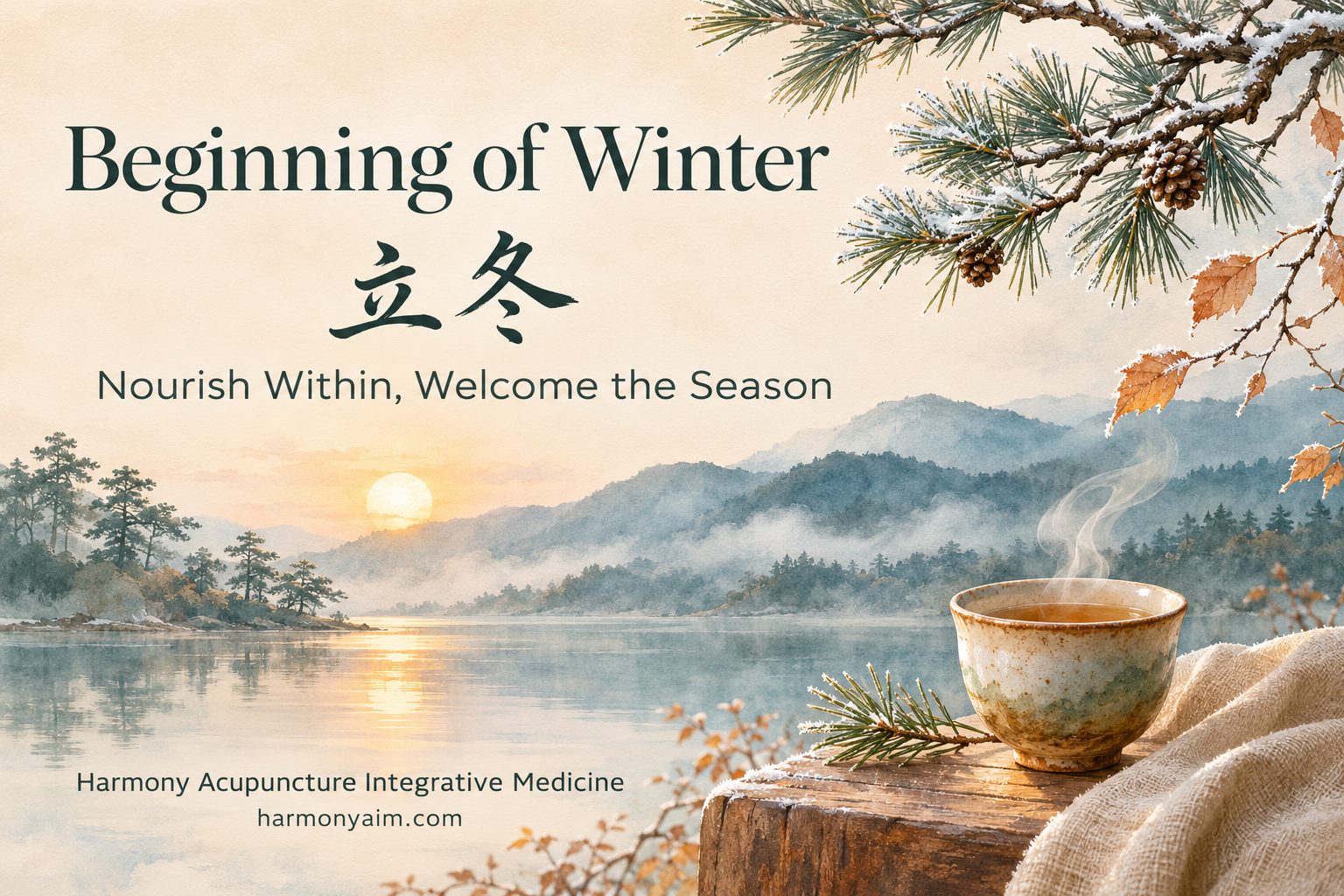
Issue #4: Beginning of Winter (立冬): Nourish Within, Welcome the Season
As the last golden leaves fall and Maryland mornings turn crisp, nature begins to settle into winter’s quiet rhythm. Lìdōng (立冬), or the Beginning of Winter, is a traditional Chinese solar term in early November. It invites us to prepare for colder days by nourishing the body, protecting warmth, and making room for rest.
At Harmony Acupuncture Integrative Medicine, we see this transition as an opportunity to bring traditional Chinese medicine (TCM) wisdom together with practical guidance from biomedicine.
Winter in TCM: A Season of Storing and Restoring
In TCM, winter is associated with the Water element and the Kidney system, traditionally understood as a foundation of growth, reproduction, and constitutional vitality. The season emphasizes “storing”: conserving our resources so that new growth can emerge in spring.
These are traditional functional concepts; the TCM Kidney system is broader than the anatomical kidneys described in biomedicine. Feeling tired or cold does not, by itself, indicate kidney disease.
Winter’s message is gentle: allow recovery to become part of daily life. Like a tree drawing its resources inward, we can make space for quieter evenings, nourishing meals, and a more sustainable pace.
Warm the Table with Balanced Meals
A bowl of vegetable and bean soup, oatmeal with walnuts, or a stew with tofu, fish, or lean meat can bring comfort on a cold day. TCM traditionally favors warm, cooked foods during winter, particularly for people who find cold meals uncomfortable.
From a biomedical perspective, the nutritional value comes from the ingredients: vegetables, legumes, whole grains, and adequate protein help build a balanced eating pattern. Black beans, sesame seeds, and walnuts have traditional associations with winter nourishment, but no single food restores “Kidney energy” or treats kidney disease.
Use ginger or cinnamon in ordinary cooking if you enjoy them. “Warming” does not mean eating excessively spicy foods or taking concentrated supplements. If you have diabetes, keep portions of rice, noodles, sweet potatoes, and sweetened drinks consistent with your glucose management plan.
Rest Well and Welcome Daylight
TCM encourages longer rest and less overexertion during winter. Modern understanding adds another perspective: seasonal changes in daylight can influence our sleep–wake rhythms and mood. National Institute of Mental Health (NIMH)
Keep a regular bedtime and waking time, and spend some time outdoors during daylight when possible. A morning walk can combine light exposure, movement, and a welcome change of scenery. Let the evening become quieter, with a comfortable routine that helps you unwind.
If low mood, loss of interest, or excessive sleepiness persists or interferes with daily life, speak with a healthcare professional. Seasonal affective disorder is a form of depression that deserves appropriate care. National Institute of Mental Health (NIMH)
Keep Moving with the Season
Conserving energy does not require becoming inactive. Walking, tai chi, gentle stretching, and strength exercises can all fit into a winter routine.
Adults can work toward at least 150 minutes of moderate activity each week, with muscle strengthening on two days, adapting activity to their health and abilities. Short sessions count. On icy or unpleasant days, indoor walking or a simple home routine can help maintain consistency. CDC
Wear layers and warm up gradually. TCM traditionally emphasizes keeping the lower back and feet warm; practically, comfortable clothing and dry footwear make cold weather activity more pleasant.
Individualized Care for Winter Comfort
Acupuncture may help some people manage certain chronic pain conditions, including low back and neck pain. Its role depends on the individual and the condition being treated. NCCIH
Moxibustion, which uses heat from burning mugwort near selected points, is traditionally used to warm and support yang qi. Suitability requires individual assessment, and care is needed to prevent burns and smoke irritation, especially for people with reduced sensation or respiratory sensitivity. Neither treatment replaces evaluation of persistent or unexplained symptoms. health.maryland.gov
A Quiet Beginning
The Beginning of Winter reminds us that health includes both movement and recovery. Prepare a warm meal, enjoy the daylight, stay connected with loved ones, and give yourself permission to rest.
At Harmony Acupuncture Integrative Medicine in Columbia, Maryland, we support each patient’s individual health needs and long-term well-being through thoughtful, personalized care. May this season bring warmth, steadiness, and renewed strength.