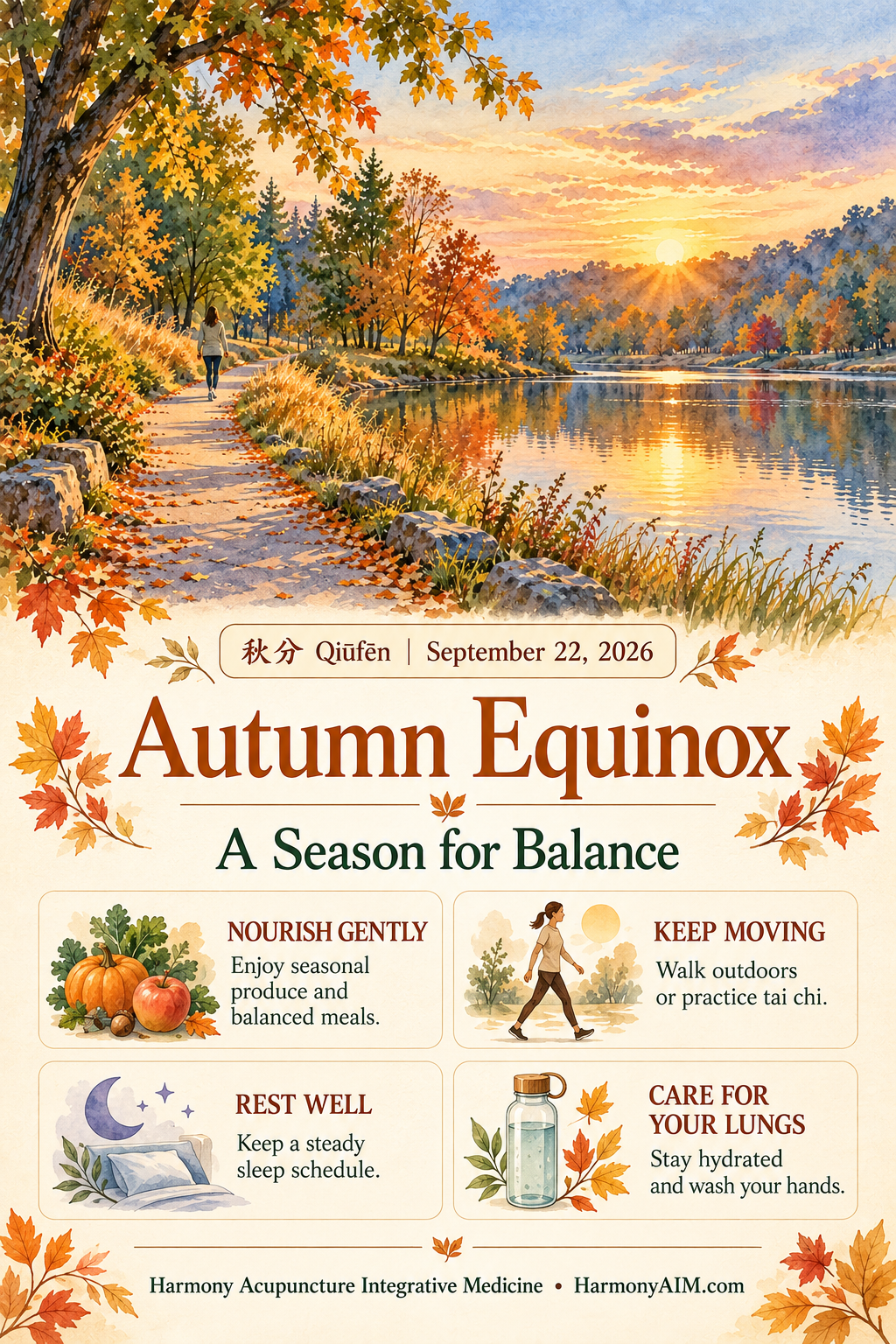
Issue #3 – Autumn Equinox (秋分): Finding Balance as the Seasons Change
The autumn equinox, or Qiūfēn (秋分), fell on September 22 in 2026. Around this time, day and night are nearly equal in length. In Maryland, mornings and evenings often feel cooler even when afternoons remain warm. The equinox offers a natural reminder to adjust gradually to the changing season and make room for both activity and rest.
A Season of Balance in Traditional Chinese Medicine
In traditional Chinese medicine (TCM), autumn is associated with the Lung system and the movement of energy inward. This is a traditional way of describing seasonal patterns, rather than a claim that the calendar itself causes illness. As the air becomes cooler and sometimes drier, TCM encourages us to protect the lungs, care for the skin, and maintain a steady daily routine. The idea of balance is especially fitting at the equinox: we can continue enjoying time outdoors while preparing for shorter days and colder weather.
You do not need to make dramatic changes overnight. Notice how you feel. If you wake with a dry throat, spend more time in heated indoor air, or feel tired after a busy summer, small adjustments to food, sleep, and activity may help you feel more comfortable.
Nourish and Hydrate Without Overcomplicating Meals
Seasonal foods can make meals satisfying as the weather changes. Try cooked vegetables, squash, sweet potatoes, beans, whole grains, pears, and apples alongside a source of protein. Warm soups and stews are especially comforting on cool evenings. In TCM, moistening foods such as pears are traditionally used during the dry autumn season. From a Western nutrition perspective, fruit and vegetables also provide water, fiber, and a variety of nutrients.
Drink water regularly even when you feel less thirsty than you did in summer. If you have diabetes, include fruit as part of a balanced meal or snack and pay attention to portions that work for your glucose plan. There is no need to rely on a special “autumn diet”; variety and consistency matter more than any single food.
Keep Moving as the Days Grow Shorter
A pleasant autumn walk can support cardiovascular health, mood, and sleep. Walking after a meal is an easy way to add movement to the day. Tai chi, gentle stretching, or other activities you enjoy can also help maintain flexibility and a sense of calm. Adults can work toward 150 minutes of moderate physical activity each week, adjusting the pace to their health and abilities.
Cool mornings may call for an extra layer, while warm afternoons may still require water and sun protection. Dress for the actual weather instead of the date on the calendar. If outdoor allergies bother you, check local pollen conditions and follow the treatment plan recommended by your clinician; ragweed pollen is a common fall trigger.
Protect Sleep and Respiratory Health
Earlier sunsets can shift daily routines. Try to keep a regular bedtime and wake time, get some daylight in the morning, and give yourself a quiet period before bed. For most adults, at least seven hours of sleep is a useful goal. In TCM, allowing more time for rest in autumn reflects the season’s inward rhythm; in Western medicine, adequate sleep supports day-to-day health and well-being.
Autumn also leads into the respiratory virus season. Wash your hands, improve indoor airflow when practical, and ask your healthcare professional which seasonal vaccines are appropriate for you. These steps are especially useful if you work closely with others or have a health condition that raises your risk of complications. Acupuncture may be part of a personalized wellness plan, but it does not replace vaccination or medical care for infection.
Take a Moment to Rebalance
The autumn equinox is less about following strict seasonal rules and more about paying attention. A nourishing meal, a short walk, enough rest, and a little time to slow down can make the transition feel steadier. At Harmony Acupuncture Integrative Medicine in Columbia, Maryland, we value this thoughtful blend of traditional wisdom and practical, evidence-informed care. May the new season bring you comfort, balance, and renewed energy.